Insulation Grants
Horizon Renewables
UK Insulation Grant Experts
All Horizon Renewables insulation grants cover the full cost of the installation.
Internal Wall Insultation (IWI)
Internal wall insulation involves insulating the inside surface of the external walls, which is a viable alternative to external wall insulation. In our view, it is a superior option for properties with unique features. Solid walled properties lose almost half of their heat through the walls, and insulating them can reduce heat loss and maintain warmth indoors for longer periods. The addition of insulation to internal walls through internal wall insulation can also enhance the overall quality of your property’s finish.

Room in Roof Insultation (RIRI)
A ‘Room in roof’ refers to a living space located within the roof area of a house, which is typically accessed through a fixed staircase. This area generally features sloping ceilings, though it may not always be the case if there are full width dormer windows installed. Such a room could be the result of converting a loft space, or may be an original feature of the building’s design, such as the upper floor in a dormer bungalow.
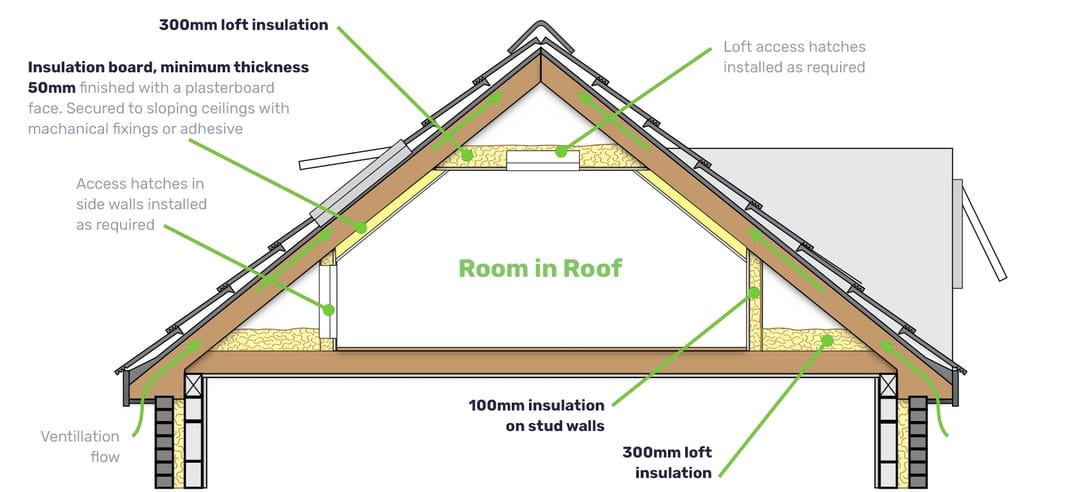
Room in Roof insulation is a minimum insulation requirement for ECO4. Which means any un-insulated roof rooms must be brought up to current standard to access the ECO4 funding.
Loft Insulation
In comparison to other European countries, the UK possesses an older housing stock, and as a result, many houses were constructed without prioritizing energy efficiency. Consequently, there is a possibility that your un-insulated loft could result in heat loss of up to 25%. By installing loft insulation, which comes at no cost to you, the heat loss through your loft can be reduced, thereby keeping the warmth within your home. This insulation can remain effective in retaining heat for around 40 years and also reduce carbon emissions and heating bills, creating an opportunity for potential savings of hundreds, and in some cases, thousands of pounds per year.
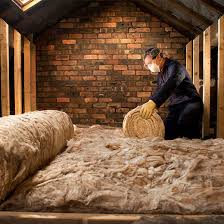
Loft insulation is a minimum insulation requirement for ECO4. Which means any un-insulated roof rooms must be brought up to current standard to access the ECO4 funding.
Cavity Wall Insulation
For properties constructed after 1930, it’s highly likely that they are equipped with Cavity Walls. This means that the external walls consist of two masonry walls (made of brick or block), separated by a cavity of at least 40mm. One way to spot a Cavity Wall is to look for the ‘stretcher bond’ brick pattern, where the bricks are laid lengthways. Additionally, a Cavity Wall tends to be thicker than 270mm.
To install Cavity Wall Insulation, a series of holes are drilled on the mortar joints of the external wall, and a bonded polystyrene bead is injected into the cavity. After filling the cavity, the holes are repaired and colour-matched to blend with the original mortar. All installations come with a 25-year insurance-backed guarantee.
By installing Cavity Wall Insulation, you can save up to £300 annually and create a more comfortable living environment in your home. The ECO Scheme provides funding for this initiative, and we would be pleased to assist you in determining your eligibility and arranging a free technical survey. Don’t hesitate to contact us to get started.
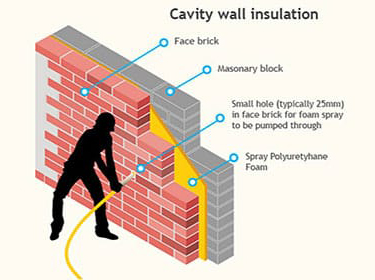
Cavity wall insulation is a minimum insulation requirement for ECO4. Which means any un-insulated roof rooms must be brought up to current standard to access the ECO4 funding.
A company you can trust
Horizon Renewables are members of numerous organisations to ensure complete peace of mind for our customers.




Speak to an expert today
Eco Shield Grants are members of numerous organisations to ensure complete peace of mind for our customers.
01706 551 911
Speak to our friendly team today.
E-mail us direct
Have any questions? email our team today
Check eligibility
Click here to check your eligibility.